
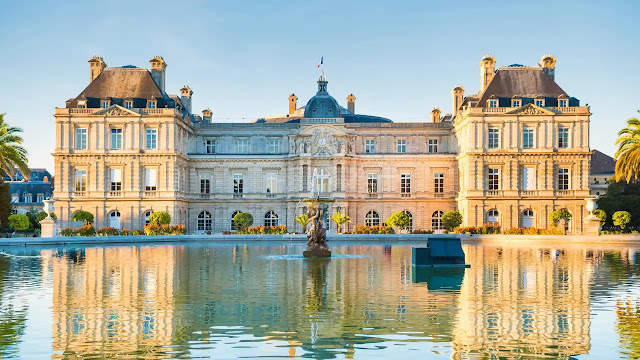
Luxembourg website
The country of Luxembourg is located in the northwest of Europe. It is called the Grand Duchy of Luxembourg, and it is one of the smallest countries in the world. The following is the most important information about this country:

Capital of Luxembourg
The capital of the State of Luxembourg is Luxembourg City, one of the liveliest cities that attracts tourism and tourists. Because of the many places it contains that entice others to visit and enjoy them, especially since it contains many museums and theatres, the language will not be a barrier for those who wish to visit them. In addition to the three official languages of the city (Luxembourgish, French, and German), the visitor can use English or… Portuguese or Italian. The city also contains many green spaces, distinct forests, and archaeological sites.
The most important feature of Luxembourg City is the northern part, as it is a historical region. It is located on a large rocky plateau called the “Kirchberg Plateau” and is surrounded by valleys and rivers; on the other side of it, there is a valley called Wadi Al-Zeit, and this area has become the new headquarters. For many European institutions of a financial and cultural nature, Luxembourg City is in fact, although it is one of the smallest European capitals, it is a city with international standards, with a population of (124,000) thousand people, and foreigners residing in it constitute (70%) of the total population, and thus It is a city with a multi-ethnic and multi-sectarian population, containing approximately (170) nationalities.
Geographical features of Luxembourg
The State of Luxembourg is located in the northwest of the European continent and is bordered by the State of France to the south, the State of Belgium to the northwest, and the State of Germany to the northeast. It is considered one of the smallest countries in the world in terms of geographical area, with an area of 2,582 square meters. It extends from north to south by approximately 82 km, while it extends from east to west by approximately 82 km. It has a diverse geographical nature, including plains, forests, lakes, as well as rivers, and many forests and natural parks with picturesque landscapes.
It should be noted that Luxembourg shares common borders with Belgium in the northwestern region of (148) km, while its borders with Germany in the east are (135) km, and in the south with France (73) km, which has led to some calling it The third border country, and most of the cities and villages in it are only 30 km away from the border.
Demographics of Luxembourg
Regarding the nature of the population in the State of Luxembourg, their population, according to estimates in 2020 AD, is (633,100) thousand people, and their population is expected to reach (763,000) in 2030 AD, The most important thing that distinguishes this population is their diversity; As half of the population does not hold Luxemburg nationality; That is, they are foreigners, as the population is a mix or mixture of cultures and languages, which gives it the characteristics of global cities.
n addition to those who live permanently, there are approximately 185,000 employees who come to work there from neighbouring countries such as Germany, Belgium, and France, as they contribute to supporting the country’s economy and advancing it continuously. It is worth noting that half of the country’s population is women, as the average age of newborns is 80 years for males and 84.5 for females.
Languages in Luxembourg
There are many languages used in the State of Luxembourg, but the official and approved languages there are three: (Luxembourgish, German, and French), and these are the official languages that were approved under the country’s multilingual law, which was issued in 1984 AD, which stipulated: Luxembourgish is considered the national language, while German and French are administrative languages. Luxembourgish and German are used more widely in the north and east of the country, while French and Portuguese prevail in the south of the country.
People have begun to use many languages due to the multiplicity of nationalities in the country. It has surpassed the three official languages. Therefore, it has become common for people to be able to get a job; a person must master two of these languages completely, including French. Likewise, the English language is one of the languages widely used in the country, especially in financial activity, insurance, and finance.
Religions in Luxembourg
The Constitution of the State of Luxembourg stipulates freedom of worship and public practices of religions and religious beliefs. It also grants the freedom to citizens to express those beliefs and ideas in a way that does not negatively affect security and tranquillity in society. For this reason, the state has become a religiously pluralistic nature, and the country’s population mostly belongs to Roman Catholics, there are also Roman Protestants, as well as followers of the Jewish religion, and finally, there are also good numbers of Muslims.
History of Luxembourg
The history of the founding of the Luxembourgish state goes back to the Roman state. It was originally created to be a Roman fortress because of its distinctive geographical location which was used to reach Spain. This was between the sixteenth and seventeenth centuries. The founding of the state dates back to the year 963 by Count “Siegfried,” a descendant of Charlemagne, ruler of the Frankish Kingdom. Count Siegfried was granted an area near the valley of the Alzeit River, which was a small stronghold called “Lucilinburhuc”, and for this reason, the name Luxembourg appeared for the first time in history, and until now, the state and its capital bear this name.
Currently, the State of Luxembourg is a member of the United Nations, the European Union, and the Organization for Economic Cooperation and Development, as well as a member of NATO. The capital also includes many international institutions and agencies affiliated with the European Union, and on October 18, 2012, the State of Luxembourg was chosen for the first time in its political history and even holds a temporary seat on the United Nations Security Council.